Educational Neuroscience in Chile

minsolconference25

What the future of educational neuroscience looks like: a report from Chile

How do we move from understanding the brain to improving outcomes in the classroom? This was the central question as researchers from the Centre for Educational Neuroscience (CEN) travelled to Santiago, Chile, in November 2025 to share expertise at two major Latin American Science of Learning events.

The two events brought together researchers from the Millennium Nucleus for the Science of Learning (MiNSoL), UNESCO Regional Office in Santiago, the Centre for Advanced Research in Education (CIAE) at the University of Chile, and the CEN in the United Kingdom, as well as researchers from Latin America and the Caribbean, and Europe, with the goal of strengthening links between science and education.

On Day One, Professor Michael Thomas, Professor Andy Tolmie, Dr. Rebecca Gordon, and Dr. Emma Meaburn joined international experts at the inaugural Conference on the Science of Learning in Latin America (CCA 2025) to discuss the state of the science of learning in 2025, and how to translate educational neuroscience insights into education policy and teaching practice. On Day Two, the conversation continued with the UNESCO Regional Gathering on the Science of Learning, hosted in collaboration with UNESCO Santiago.

Day One: Inaugural Conference on the Science of Learning in Latin America

The conference opened with a keynote address from Professor Michael Thomas, where he mapped out the current state of the field. He moved beyond skills and knowledge acquisition to emphasise the importance of wider factors that underpin learning. Factors such as sleep, diet, mental health, and the physical environment can all help (or hinder) the brains ability to learn.

This set the stage for Dr. Rebecca Gordon, who expanded on the environmental aspect by discussing her planned country comparison study between Brazil and the UK. The project proposes to examine the environmental factors that might affect the development of the cognitive mechanisms implicated in the learning process, and how these might be mediated by interventions, policy and practice.

New evidence

One of the most practical takeaways came from Professor Andy Tolmie, who presented findings from a recent randomised cluster trial on spaced learning, the technique of breaking learning into short intervals spaced out over time with distractions in between. The study, implemented in 18 UK secondary school physics classrooms, found that combining one hour of spaced learning with conventional teaching resulted in 60% to 90% greater learning than either on their own (partial eta-square = .06 to .29).

Dr Emma Meaburn provided an example of taking a genetically informed approach, presenting findings from a study that explored the pathways linking parental genetic liability for mental health conditions to variation in adolescent internalising and externalizing behaviors. The study identified that genetically influenced environmental pathways are important in the development of early adolescent internalising behaviours, highlighting the potential of family-centered strategies for mitigating intergenerational risk for behavioural difficulties.

Why the brain matters for education

A core theme of the day was defining what value neuroscience brings to the science of learning. Professor Thomas outlined three key avenues:

Biological constraints: Learning happens within the brain, which means it is subject to specific biological limitations, which have been shaped by evolution. This can account for why we rarely forget motor skills (like riding a bike) or fear responses (like being scared of spiders), yet struggle to recall abstract facts (like the capital of Mongolia). These differences arise because different types of knowledge are stored in different brain regions and systems, with distinct biological properties.

Granularity: Neuroscience allows us to break down complex concepts like “attention” into smaller components, such as inhibition or mental effort. Educators can use this granular knowledge to tailor instruction and learning environments to these more specific underlying processes to help learners.

New interventions: Evidence-based innovation can lead to new tools. For example, the CEN’s UNLOCKE project used knowledge of inhibitory control to develop software that helps children learn counter-intuitive scientific concepts. Similarly, research led by Usha Goswami has shown that training rhythmic skills in the early years can help mitigate dyslexia-related word processing difficulties.

Emerging trends and knowledge gaps

While there is plentiful data on literacy and numeracy in the early years, the conference highlighted the need to expand our scope. Professor Thomas highlighted emerging research in the areas of:

General skills, like executive function, working memory and social-emotional skills

The home environment, and its impact on school readiness

How technology and AI is reshaping the classroom, and its impacts in learning

However, gaps remain. There is still much to understand regarding adult learners, secondary school education, the arts and humanities. Furthermore, there is a need to develop the science of teaching, that is to understand how the teacher-student relationship and teacher characteristics directly affect student engagement and learning.

The challenge: from establishing consensus to influencing policy

The ultimate challenge for educational neuroscience is determining what works, for whom, and in what context, and in the hands of what educators.

Professor Thomas warned against focusing too heavily on the child while ignoring the wider nested systems of schools, society, and the government that can support (or hinder) learning. He proposed that to tackle this, universities could act as “R&D hubs” to build the evidence base, co-creating research with schools to ensure the evidence generated is relevant and timely. Gatekeeper organizations (like the Educational Endowment Foundation in the UK) can then curate this evidence, which can feed into government policy and educational targets.

To support this vision for the future, the CEN has recently established working groups to build academic consensus on where the evidence is strong, where it is weak, and what does not work. You can read about the new CEN working groups here.

Day Two: Science of learning meets policy

The conversation continued on day two with the UNESCO Regional Gathering on the Science of Learning, hosted in collaboration with UNESCO Santiago.

Professor Thomas returned to deliver a second keynote, ‘Science of Learning and Policy: Gaps, Overlaps, and Opportunities.’ Using the UK education system as a case study, he took a deep dive into the relationship between what researchers find, what governments write in policy documents, and what happens in schools.

The ‘opportunity mission”

Analysing recent UK Department for Education (DfE) policy documents, Professor Thomas noted a strong interest in the Early Years, childcare, and school readiness. The goal here is clear: to break down barriers to opportunity and address disadvantage by targeting resources, and in a scalable and cost-effective way. There is also consideration of broader social and economic contexts, such as how to best equip children with the skills needed for their journey into adulthood and the labour market.

Where the science of learning fits in

Science of Learning and educational neuroscience is well-placed to solve many of these challenges. It can offer evidence in core areas like early development and student attainment. It can also help address modern concerns such as the impact of AI, social media, and mobile phones, as well as the sources and impacts of rising anxiety.

The blind spots: where we need to grow

However, Professor Thomas was candid about where the field currently struggles to provide insights. Because neuroscience focuses on how individuals learn, it often lacks the tools and approaches to address large-scale issues. He identified four key “gaps” where the science needs to expand to meet policy needs:

Systemic issues: Educational neuroscience investigates neural and cognitive processes, meaning it often has little to say about macro-level issues like school leadership and governance.

Workforce challenges: We currently lack research on the economics of education, such as how to recruit and retain teachers and early years providers, or how to support and incentivize lifelong learning.

Socio-cultural context: Lab-based research can be narrow (e.g., focusing on attention mechanisms) and fail to account for the messy real-world contexts that matter in education, such as housing insecurity and crime.

Building infrastructure: Factors such as the design of new schools and inclusive classrooms to climate change mitigation strategies are often overlooked, yet they have a massive impact on learning.

The ultimate challenge: translating the science

The keynote concluded by addressing the translation gap. Rather than expecting busy teachers to act as researchers, the research community must take responsibility for translating robust evidence into accessible, actionable strategies, and facilitate its integration into teacher training and continuing professional development. Importantly, the approaches we take must respect teachers’ time, knowledge and needs.

Reading, coloured overlays, and visual stress

child-overlay-picture

The idea that coloured sheets of plastic (overlays) can treat dyslexia is now viewed with some scepticism (we ourselves called it a Neuromyth). This is because high-quality randomised controlled trials, testing the effectiveness of overlays for dyslexia, found no consistent evidence that it could help improve reading accuracy (see, Evans & Allen, 2016).

However, a focus on whether overlays are a treatment for dyslexia distracts from an important separate question: do some children experience discomfort with some types of visual patterns and lighting conditions, and might this impact their performance in the classroom? Here, Daphne Jackson Research Fellow, Dr. Beverley Burke discusses the idea that a subset of children may benefit from visual adjustments when reading – and may indeed find some lighting conditions distracting in the classroom. This is a phenomenon called visual stress.

What is visual stress?

Visual stress is the inability to view certain spatial patterns, such as stripes and lines of text, without discomfort and/or distortion.  It’s suggested that this condition may be related to the neurological response experienced by individuals with photosensitive epilepsy when exposed to flicker as these individuals are usually also sensitive to striped patterns.

“The idea is that the coloured filter reduces the unpleasantness in viewing text and therefore makes reading faster – and because there is less discomfort, sustainable for longer”

Visual stress is thought to be caused by excessive neural activation in the visual cortex, which some people are more susceptible to because of a neuronal hyperexcitability (Wilkins, 2021). Discomfort then results from the consequent metabolic load – the energy demands of the hyperexcited neurons. Why isn’t everyone affected? We certainly all experience some visual patterns as more ‘buzzy’ or uncomfortable. There are individual differences in the neurophysiological properties of the visual system, partially of genetic origin, including the balance of local excitation and inhibition, and it is likely that this makes a minority of individuals more vulnerable to discomfort.

Claims that coloured interventions aid reading are not new, in fact the first case report in the literature was over 65 years ago (Jansky, 1958). The idea is that the coloured filter reduces the unpleasantness in viewing text and therefore makes reading faster – and because there is less discomfort, sustainable for longer. It is still a matter of speculation why a coloured filter would be helpful in calming down a hyperexcitable visual cortex. One proposal is that the tint of the overlay acts to redistribute the excitation in the cortex that results from a visual scene, avoiding local regions in which the cortex is hyperexcitable (Wilkins, 2021).

How common is visual stress?

How common is visual stress among children? One way to estimate this would be to see how many children show an increase in reading rate when they are given coloured overlays. One study by Wilkins and colleagues which tested over two hundred 7 to 8-year-old UK children estimated the incidence at around 7% (Gilchrist in prep).

One challenge is that the particular colour of filter that works best for a given child may vary from one child to another, and these debates continue in the field. The generation of commercial products and patents which restrict access to stimuli have sometimes got in the way of careful scientific testing.

Discomfort when reading text, and the subsequent exploration of colour overlays, are manifestations of visual stress, but the phenomenon is broader. It includes discomfort with other striped patterns (say, light coming through Venetian blinds) and lighting conditions (as with flicker from LED lamps in some classrooms), and is linked to the still-broader notion of sensory sensitivity.

Inclusive classrooms

Debates also continue about how visual stress should be defined and the key features required for diagnosis (for updated 2025 guidance see Specific Learning Difficulties Assessments Standards Committee).

Lessons from the more recent transdiagnostic approach to neurodevelopmental conditions are that we would expect visual stress to be characterised by a dimension of severity, heterogeneity of presentation, and co-occurrence with other conditions (Astle et al., 2022). For example, it might be useful to view visual stress as potentially co-occurring with dyslexia, which would imply that the use of colour overlays may aid a subset of children who are having difficulty reading.

The transdiagnostic approach encourages educators to make classrooms more inclusive. In one sense, disability is being produced by the social conditions we create. For example, if cultures had determined they would design writing to be in green ink on a red background, then individuals with Colour Vision Diversity (formerly Colour Blindness) would experience reading deficits. In the same way, culture has determined that text will be presented monochromatically as black ink on a white background, and for certain scripts and fonts, as a series of predominantly horizontal and vertical lines. This causes some individuals with sensory cortices prone to hyperexcitability problems with reading, and problems with flickering lighting in classrooms. (You may be thinking that some children show particular sensitivity to auditory stimuli too – that’s true, but not our topic today!)

The inclusive approach encourages designing classrooms to be accommodating of neurodiversity. In this case, it would mean avoiding flicker and stripes in lighting, allowing students the opportunity to vary font size and line spacing, and making available colour overlays within schools for trial and error to see if these aid reading. Perhaps more important than resolving definitions and diagnoses is an awareness among teachers and students of visual stress, and that when it comes to reading, coloured overlays or other interventions such as colour paper may be of help for some children.

Find out more

Professor Arnold Wilkins [Visual Stress.info], an expert in visual stress and reading, recently gave a seminar as part of the CEN series, and his talk can be found here [CEN – Vision of the classroom as unnatural and uncomfortable] and recent book here [Vision, Reading Difficulties and Visual Stress]. His take home message from the talk was this: “In the classroom, test for flicker using slo-mo on your smartphone (if the lighting flickers, campaign to change it). Select larger text if you can (avoid the stigma). Avoid teaching in front of Venetian blinds. Avoid bright (strongly saturated) colours in the classroom. Check if the words wobble on the page for a child, and if they do, refer the child to an optometrist who has an interest in colour overlays (https://ceriumvistech.com/find-your-local-specialist/).

References

Astle, D. E., Holmes, J., Kievit, R., & Gathercole, S. E. (2022). Annual Research Review: The transdiagnostic revolution in neurodevelopmental disorders. Journal of Child Psychology and Psychiatry, and allied disciplines63(4), 397–417. https://doi.org/10.1111/jcpp.13481

Evans, B. J. W., & Allen, P. M. (2016). A systematic review of controlled trials on visual stress using Intuitive Overlays or the Intuitive Colorimeter. Journal of Optometry, 9(4), 205-221. https://doi.org/10.1016/j.optom.2016.04.002

Gilchrist, J. M. (in preparation). To be updated!

Jansky, J.J. A case of severe dyslexia with aphasic-like symptoms. Bulletin of the Orton Society 8, 8–11 (1958). https://doi.org/10.1007/BF02657600

Wilkins, A. (2021). Visual stress: origins and treatment. CNS, Vol. 6. January 2021. Retrieved from: https://repository.essex.ac.uk/30132/7/74-86_Oruen_Vol-6_Jan-2021.pdf

Wilkins, A., Lewis, E., Smith, F., Rowland, E., & Tweedie, W. (2001). Coloured overlays and their benefit for reading. Journal of Research in Reading, 24(1), 41–64. https://doi.org/10.1111/1467-9817.00132


New blogs about CEN work

The BOLD blog is a global multimedia platform for scientific knowledge about child and youth development. The blog, along with podcasts and videos, features evidence-based articles by researchers, journalists, and practitioners on topics like educational psychology, neuroscience, genetics, and educational technology to improve learning and life chances for children worldwide. It asks questions like: What happens in children’s and young people’s brains when they learn? What does the ideal learning and development environment for each individual look like? Which programs and technologies should be pursued? Which decision makers need to be involved to improve development and learning conditions?

The BOLD blog has recently launched a collaboration with the journal Mind Brain and Education, posting blogs that delve into new scientific papers appearing in the journal.

This year, BOLD has featured two papers published by CEN members. Take a look here:

Dr. Astrid Bowen and colleagues: How do we know what works in education?

Prof. Michael Thomas and colleagues: Are we bridging the gap from brain scan to lesson plan?


Bridging findings from the lab and the Classroom

New Working Groups at the Centre for Educational Neuroscience (CEN)

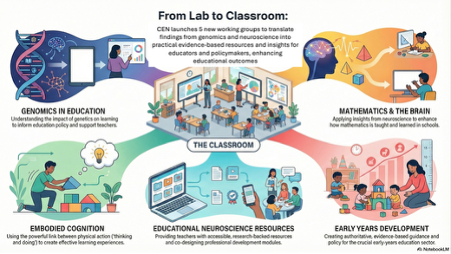
The Centre for Educational Neuroscience (CEN) is pleased to announce the establishment of several new working groups, formalising our commitment to translating rigorous neuroscientific research into actionable insights for policy, practice, and the classroom. These groups will focus on key areas spanning from genomics to physical learning, ensuring that the latest evidence enhances educational outcomes across the sector.

wgroup

1: CEN-GEN Working Group

The CEN-GENomics working group (CEN-GEN) was established in Spring 2025 to address the rapidly evolving intersection of genomics, social science, and education. This is a critical area, especially since genomics featured in the Department for Education’s (DfE) 2025 Areas of Research Interest document, highlighting the need to understand its implications for policy, practice, and families.

Who is included?

Membership includes Emma Meaburn, Michael Thomas, Jo Van Herwegen, and Mojtaba Soltanlou, alongside external experts Yulia Kovas (Hult International Business School) and Tim Morris (UCL).

Focus in the Near Future?

The group has outlined two initial stages toward its long-term goal of supporting strategic planning by the DfE and other policymakers:

Building Scientific Consensus: The group is consulting with the DfE and gathering perspectives regarding the state of the science and plausible evidence-based pathways to translation. These findings will be published as a report intended to serve as a grounded and accessible resource for policymakers.

Teacher Consultation: Following the report, a workshop for teachers and educational professionals is planned for spring 2026. The goal is to explore teachers’ understanding and concerns regarding genomic information, and identify the professional development and support they might require.

2: CEN Early Years Working Group

The CEN Early Years Working Group was formed through a partnership between CEN and SEY (the Institute for the Science of Early Years). This group brings together leading researchers and senior figures from the UK’s major early-years organisations and promotes genuine two-way communication between research and practice.

Who is included?

This group is led by CEN member Sam Wass with contributions from Gemma Goldenberg, Denis Mareschal, Emily Farran.

Focus in the Near Future?

The primary focus is to co-develop authoritative, evidence-based policy positions and best-practice guidance for the early-years sector. The group leverages members’ extensive networks, sharing the latest neuroscientific insights while ensuring that the experiences and perspectives of practitioners shape future research.

3. CEN – Educational Neuroscience in the Classroom

This working group was established in Spring 2025, building on our research centre’s longstanding commitment to translating research into practice for teachers.

Who is included?

The membership includes Rebecca Gordon (Lead), Emma Meaburn, Gemma Goldenberg, Roisin Perry, Mojtaba Soltanou, Laura Outhwaite, and Jo Van Herwegen.

Focus in the Near Future?

The group aims to strengthen CEN’s role as a trusted source for evidence-based insights into the science of learning:

Resource Consolidation: They will map the extensive evidence body already available through the CEN, creating a searchable database that consolidates existing resources, including website materials and videos. This is intended to ensure teachers can easily access high-quality, research-informed content.

Professional Learning Co-design: The group will engage teachers directly through funded focus groups to identify priority topics and preferred formats for professional learning. This co-design process will then inform the development of a teacher-focused educational neuroscience module.

Integration into Teacher Pathways: Leveraging CEN’s network of over 200 partner schools, the group will support the Initial Teacher Education (ITE) and Early Career Framework (ECF) team at UCL in integrating educational neuroscience into teacher development pathways.

4. CEN Maths Working Group

The CEN–Math group was established in Spring 2025 to highlight the critical role of mathematical learning in school readiness, academic achievement, and learning generally. Mathematics is a cornerstone of formal education: numeracy, alongside literacy, underpins the ability to access and build knowledge across subjects. Our initial objectives are to translate insights from the educational neuroscience of mathematics into practice—bringing evidence-based approaches to schools, teachers, and policymakers—and to promote understanding of how scientific findings can enhance educational outcomes.

 Who is included?

This group is led by Mojtaba Soltanlou and includes Jo van Herwegen, Emily Farran, Michael Thomas, Rebecca Gordon, Flavia Santos, Laura Outhwaite, Katie Gilligan-Lee, and Iroise Dumontheil.

Focus in the Near Future?

The initial objectives are focused on translating insights from the educational neuroscience of mathematics into practice. This involves bringing evidence-based approaches to schools, teachers, and policymakers and promoting understanding of how scientific findings can enhance educational outcomes.

5. CEN Embodied Cognition Working Group

The CEN – Embodied Cognition group was established in Spring 2025, recognising the importance of bodily engagement in cognitive processing for learning. This principle is based on the strong interconnection between “thinking and doing”. Bodily engagement includes gesture, movement, exploration, manipulating concrete objects, spatial reasoning, and other sensorimotor experiences, which are identified as powerful tools for effective learning.

Who is included?

The group is led by Emily Farran, and also includes Michael Thomas, Rebecca Gordon, Andy Tolmie, Denis Marschal, Spencer Hayes, and Ori Ossmy.

Focus in the Near Future?

The initial objectives are centred on translating research into accessible policy-ready and practice-ready formats. They also aim to disseminate the current consensus on what is known (and what is not known) about how embodied cognition benefits learning.

An Ongoing Commitment to Bridging Science and Practice

By combining rigorous research with practical application, these new working groups underscore the Centre for Educational Neuroscience’s dedication to empowering educators with the knowledge and tools required to enhance learning outcomes. We look forward to sharing the output from these groups as they translate complex scientific findings—from genetics to sensorimotor experiences—into tangible benefits for classrooms and policymakers. Our commitment is to ensure all practitioners and policy makers have access to information that can inform their decision making.


ENCoRE conference

encore-picture-6

The inaugural ENCoRE conference, hosted by the Centre for Educational Neuroscience, took place in London, UK, in April 2025. This two-day event brought together leading experts, researchers, practitioners, and early career researchers from institutions including UCL Institute of Education, University of Cambridge, Birkbeck, Chile’s Millennium Nucleus for the Science of Learning, and several international partners (e.g., from USA, Turkey, Canada). The conference aimed to foster collaboration, advance innovation, and critically explore current research trends, methodologies, and developments in the field of educational neuroscience. The published Proceedings, containing abstracts of the research presented at the conference, are available here: Encore-2025-Proceedings.

The keynote speakers were Professor Usha Goswami (University of Cambridge), who gave a talk entitled ‘Dyslexia, rhythm, language and the developing brain’; and Professor Paul Howard-Jones (University of Bristol), who gave a talk entitled ‘The journey from neuroscience research to education’. The keynotes can be viewed below (thank you to our sponsors, Learnus, for the filming and production of these videos).

For more details about the conference and a review of highlights from CEN member Mahi Elgamal, see here.


CEN Activities report 2024-2025

The Centre for Educational Neuroscience (CEN) was established in 2008 and is a university-based research centre which spans Birkbeck University of London and University College London, as well as including affiliate members. Its goal is to support translational research and dialogue between neuroscience, psychology, and educational policy and practice.

Today, we’re publishing a report summarising our research activities, engagement, and dissemination for CEN members in 2024-2025.

The report covers diverse projects spanning randomised controlled trials of educational interventions, cohort studies tracking children’s developmental and the societal, technological, and health factors that shape their educational trajectories, as well as research projects investigating skills relevant to education and dissemination activities involving the science of learning. This overview of our recent activities gives an indication of the range of translational research work currently underway in our centre. The CEN hosted its first annual conference, ENCORE, in April 2025.

Take a look at the report here: CEN-Report-on-activities-2024-2025.


A new book on attention and focus for key stage 1 and early years teachers (that doesn’t talk about executive functions!)

action-on-distraction

Prof Sam Wass and Dr Gemma Goldenberg are child psychologists and researchers working at Institute for the Science of Early Years and Youth. Sam, based at the University of East London, is an affiliate member of the Centre for Educational Neuroscience.

“Take Action on Distraction” is the first book in the Bloomsbury series  ‘Putting Neuroscience into Practice” and was published on 27th February 2025. In this blog, Sam discusses the new approach that the book takes.

“For decades, research on attention and focus in educational settings has relied on experimental paradigms designed to measure a child’s ‘pure’ cognitive capacity for voluntarily attention control. These attention tasks, commonly used by educational and clinical psychologists, aim to study the developmental correlates of voluntary attention control and how voluntary attention control is instantiated in the brain.  

My first 10 years or so as a scientist were spent working almost entirely with this type of task. I spent my PhD on an MRC-funded program that used experimental tasks to train voluntary attention control in young children. After that, I moved to the MRC Cognition and Brain Sciences unit at Cambridge and took part in a number of similar studies. 

Executive function training doesn’t work – why?

10 years on, we’re now pretty sure that running this type of attention training doesn’t offer general benefits. Although it might lead to performance improvements in the specific task being trained, these training effects don’t translate to real-world outcomes. This has led some researchers to question this whole approach to studying brain and behaviour. For me, this meant paying attention to those hard-to-publish findings that had been nagging me for years but were often swept under the carpet. For example, experimental measures of voluntary attention control show little association with other tasks designed to measure the same thing, or even with themselves, when the same tests were administered repeatedly to the same children.

Increasingly, this led me to question: can we abstract a ‘pure’ measure of a child’s capacity for voluntary attention control, independent of context or setting? If we can’t, this is big news – because it means that we need to completely change our whole approach to studying attention development in children. 

So, when Bloomsbury Education asked me and my colleague Gemma Goldenberg to write a book on supporting attention and focus in children, we set ourselves the aim of thinking about attention differently. So, if we weren’t going to focus on executive function tests and training, what did we talk about instead? 

Emphasising that attention control is context-specific

Instead of talking about ‘pure’ cognitive capacities, we have emphasised the context-specificity of attention.

“WE NEED TO TALK ABOUT WHY SOME SETTINGS ARE EASIER FOR CHILDREN TO CONCENTRATE IN THAN OTHERS”

We talk about how, and why, some settings are easier for children to concentrate in than others – and offer practical tips for how teachers can optimise their setting. We emphasise that there is no ‘one-size-fits-all’ approach – that a particular setting may be optimal for one child but sub-optimal for another, and that it is the fit between a child and their setting that is key. 

We also discuss how, and why, some types of content are easier for children to concentrate on than others. We discuss how familiarity, and predictability, can make it easier to concentrate on some things. Again, this is not  ‘one-size-fits-all’ – content can be more or less predictable, and consequently more or less easy to focus on, depending on the child and their learning stage. 

This different approach will, we hope, offer some easy, practical tips for teachers on how to improve attention and focus in young children and encourage people to think about how factors like the physical environment, movement and emotion play a role in attention, rather than attention being a discrete skill that happens in isolation. 

It’s definitely controversial though! So please do check it out – you’ll receive a 25% discount if you enter ‘DISTRACTION25’ when ordering through the Bloomsbury website – and, if you have any thoughts – email us – Sam and Gemma – at s.v.wass@uel.ac.uk and g.goldenberg@uel.ac.uk.”


The inaugural UK Educational Neuroscience conference (ENCORE)

encore-flyer4

Educational Neuroscience Collaboration and Research UK (ENCoRe UK) is pleased to announce its very first conference in London, to be held at Birkbeck University of London on 24th and 25th April 2025. This two-day event will bring together experts, researchers, and students to foster collaboration and innovation in the field of educational neuroscience.

Keynote presentations will be delivered by Prof. Usha Goswami and Prof. Paul Howard Jones, alongside short talks, poster sessions, and discussion tables. The conference is sponsored by Learnus.

The scientific programme is now available hereThe main conference location is the Clore Management Centre basement lecture theatre (CLO B01) at Birkbeck University of London, Torrington Square WC1E 7HX.

The pre-conference programme is available here. The pre-conference location is room LG04 at 26 Bedford Way, London WC1H 0AP.encore-pre-conference-flyer-final

Registration is at this link and will close 1 April [update: registration has now closed]. Registration is £70 (£50 for students). A Pre-Conference Workshop on Thursday morning will offer early career researchers (ECRs) and PhD students training on research methodologies, including 15-minute sessions covering various approaches. The pre-conference workshop is free but registration is required.

Timings: The pre-conference will run from 10am-12pm on Thursday 24th. The main conference will run from 1pm to 6pm on Thursday 24th and from 9am to 3pm on Friday 25th April. A conference dinner may be organised on the evening of Thursday 24th (tbc).

For more information, see here.

Download the flyer

New CEN paper on best practices in evaluating “What Works” in the classroom

pexels-artstel-4019754

Classrooms are complex places. It can be hard to work out what classroom practices are most effective in improving learning outcomes, behaviour, and wellbeing. But there’s general acceptance that collecting evidence about what works is a good way to make progress.

In the spring of 2023, a group of educators, researchers, and policymakers met at the Université Paris Cité to discuss how to address the challenges of establishing what works best in classrooms, and for which children, and in which contexts.

The CEN has now published a new paper in the Journal Mind, Brain and Education based on this international roundtable, entitled Evaluating What Works in the Classroom: Best Practice and Future Opportunities.

The paper, lead authored by CEN member Astrid Bowen, summarises consensus from presentations and discussions across the three-day event. It considers what the main challenges are for evaluating “What Works” in classroom practices and potential solutions for overcoming these.

There were four key areas which arose most frequently during the roundtable discussions. These were issues concerning: (1) who is involved in evaluations and when; (2) a need for methodological innovation; (3) communication; and (4) the understanding and use of evidence by educators and policymakers.

Throughout the discussion, the roundtable tackled some of the key issues that have hindered translational research efforts and implementing the science of learning in education, including the need for shifting ownership of evaluation research to educators, and refining research methodologies to better capture intervention effects in real classroom situations.

Here are highlights from the paper:

What is already known about this topic?

  • Improving student learning is a global concern, and teachers and policymakers want to know “what works” in practice to improve student outcomes.
  • In the United Kingdom and United States, randomised controlled trial (RCT) designs have come to be viewed as the “gold standard” for intervention evaluation in education.
  • Due to a variety of practical and methodological concerns, as well as issues with how findings from RCT trials can be interpreted, there are issues with relying exclusively upon this method to assess effectiveness in the classroom.

What does this paper add and how?

  • This paper outlines the most pressing challenges surrounding how to assess “what works” to improve learning outcomes, most of which require nuanced, multi-level solutions.
  • Collaboration between research institutes in the UK and Europe provided international insights on how particular challenges are being addressed in different countries and research contexts and a range of case examples from real evaluations.
  • As well as consensus on current issues, some broad outstanding questions – such as which outcomes are the most important to target? – are also provided to prompt discussion and a move to greater consensus between research, policy and practice in these areas.

What are the implications for practice and/or policy?

  • The goals of translation should be built into evaluation design at the outset. For example, by designing evaluations alongside educators to understand what is and is not feasible in their contexts.
  • New and improved research tools are required to assess outcomes for large and small populations of students: standardised data systems at the school level; better standardised measures assessing outcomes beyond subject knowledge.
  • Educators and decision-makers should have access to research literacy training, in order to facilitate a research mindset and the skills to engage with evaluation evidence.

Read the full article at: https://doi.org/10.1111/mbe.12430


Does homework work? The science of when and how to approach it

homework-img

In this blog, CEN member Mahi Elgamal takes a deep dive into the science of homework: what does the evidence tell us about its effectiveness?

Here’s the take-home:

Homework is not legally required in the UK, and neither the UK Department for Education nor the regulatory body Ofsted mandates it. However, many schools still assign homework, starting as early as reception class. Advocates argue that homework helps reinforce learning, promotes independence, develops life skills, and leads to better academic outcomes. Schools typically outline their homework policies in handbooks or on websites.

This article explores how homework supports learning, emphasising retrieval practice (recalling information without notes) and spacing (revisiting material over time) as the most effective strategies. These methods improve long-term retention and are more beneficial than passive techniques like rereading.

Additionally, the effectiveness of homework varies by age. For middle and high school students, it correlates with higher academic achievement, while its benefits for younger children are less clear.

For the full story, read on!

Although in the UK, homework is not compulsory by law, and neither the Department for Education (DfE) nor Ofsted requires schools to assign homework, many schools do set students homework from as young as reception class onwards. Some argue homework is beneficial to help reinforce learning, promote student independence, develop key life skills, and foster stronger academic outcomes. Many schools will set their expectations around homework with parents and students on their website or school handbooks and many schools will ask parents to sign the homework record. As such, parents might wonder: “when is a good time for homework” and “how can I get the most of my child’s homework?”

How does homework help my child’s learning?

Many parents, locked in nightly struggles over homework, may wonder whether and how these tasks benefit their children’s learning. Before discussing the best approach to homework, it is worth first asking: What is homework really meant to achieve?

Researchers have identified effective strategies for independent learning, particularly when applied to homework. Among these, “retrieval practice” and “spacing” stand out with the strongest evidence of effectiveness [1] [2]. Retrieval practice—recalling previously learned information—enhances long-term learning and memory [2].

In the same way, spacing, which involves revisiting material after some time rather than immediately, reinforces learning by encouraging active recall [2]. A homework task that requires children to answer questions about class material without referring to their notes exemplifies these strategies. Retrieval practice and similar learning strategies outperform passive techniques like rereading or reviewing material when it comes to strengthening knowledge gained in the classroom [2]. Homework can be seen as a great opportunity to put these strategies into practice and help foster the development of autonomous and self-regulated learning habits.

Homework across ages: Does it work the same for all children?

The effectiveness of homework can vary by age. For middle and high school students, it is associated with higher standardised scores in tests of academic achievement, while the benefits for younger children are less clear [3]. According to charity the Education Endowment Foundation, homework in primary schools tends to have a smaller average impact and remains under-researched compared to secondary education.

“Studies in secondary schools show greater impact of homework (+5 months additional progress) than in primary schools (+3 months)” – Education Endowment Foundation

Why might that be? One possible explanation could be that homework also comes with some non-academic benefits that are not easily measurable for younger children, like developing their sense of responsibility and independent problem-solving skills which might not be immediately reflected in their achievement in particular subject areas [4]. On the other hand, there are valid concerns about young children’s limited capacity to maintain attention on lengthy tasks and to have already developed solid study habits by tuning out distractions in their environment, compared to older children [5].

The “homework gap”: how does it affect children?

Homework can enhance academic growth for many students, but its impact often varies based on individual backgrounds and resources. Depending on how it is designed and supported, homework can either mitigate or widen socioeconomic-linked attainment gaps.

For disadvantaged children, homework can provide an opportunity to reinforce learning, particularly when they lack academic support at home. However, these children often face barriers, such as inadequate study spaces, limited technology access, unstable internet, and minimal parental guidance. These barriers, often referred to as the “homework gap,” highlight how socioeconomic disparities can lead to uneven academic outcomes [6].

In fact, disadvantaged children are far less likely to have quiet workspaces or reliable devices, and they often receive less parental support for completing homework. A Sutton Trust report, based on OECD PISA data, found that only 50% of the most disadvantaged 15-year-olds receive regular homework help from their parents, compared to 68% of their better-off peers [7]. This disparity means that even high-ability children from low-income families miss out on educational opportunities. In contrast, affluent families often have the resources to provide quiet, well-lit spaces, private tutoring, technology, and additional materials, giving their children an advantage [5].

Lower-income children, by comparison, struggle to complete assignments that require costly supplies or heavy parental involvement, amplifying inequities rather than reducing them [5]. This leads us to the next question: should homework be eliminated altogether?

“We should stop giving homework”—is this privilege speaking?

Eliminating or reducing homework could likely widen the achievement gap. Students from higher-income families benefit from various privileges—such as enriched language environments, access to extracurricular activities like tutoring, and cultural experiences—that are often unavailable to lower-income families. For the 4.3 million children in the UK living in poverty, homework is one tool that can help bridge this gap.

“ELIMINATING HOMEWORK MIGHT WIDEN THE ACHIEVEMENT GAP”

To address these disparities, schools can help by assigning homework that does not rely heavily on technology and extensive parental input. Initiatives such as homework clubs can provide structured environments and reliable access to resources [7]. Schools can also offer quiet study areas and workshops to help parents support their children’s learning. By implementing these measures, schools can create more equitable opportunities for disadvantaged children to keep up with their more affluent peers. However, in low socioeconomic schools, some of these measures may be challenging due to limited space and resources.

How can I best help my child with their homework?

Parental involvement in homework is often described as a “double-edged sword”, offering both opportunities and challenges to the parent-child relationship. While it is well-documented that parental engagement can positively influence student outcomes, the quality of support plays an important role in determining its effectiveness, with some difference seen across year groups and subjects [8], [9].

“PARENTS SHOULD GUIDE NOT CONTROL”

One way to scaffold motivation is through autonomy-supportive involvement, where parents guide rather than control—a method widely recognised as the most effective for enhancing achievement, especially in late childhood and adolescence [5], [10], [11]. Autonomy-supportive behaviours include avoiding controlling language and attitudes (such as invasive forms of help and constant monitoring), respecting children’s perspectives, and allowing them enough time to complete tasks independently rather than solving problems for them [12].

Providing structure—for example, helping to set clear goals, expectations, and directions—encourages a sense of internal control over learning and helps maintain feelings of competence [13]. Similarly, offering detailed instructions, action plans, and constructive feedback can further support children’s engagement [14].

This approach encourages children to develop their own schedules and solve problems independently, which nurtures both skill development and a sense of competence, while still being there for help. Controlling approaches, however, may hinder children’s ability to take initiative and reduce their intrinsic motivation and learning engagement [15], [16].

For example, an autonomy-supportive parent may seek the child’s input, try to understand their approach to solving the task, and encourage them to work independently. In contrast, a controlling parent would likely dictate how the homework should be done, offering little to no opportunity for the child to contribute to the conversation [17].

The benefits of autonomy-supportive involvement are twofold. First, it promotes skill development by enabling children to independently navigate challenges, enhancing their problem-solving abilities and self-efficacy [11]. Second, it supports their motivational growth by allowing them to take ownership of their learning, thereby increasing their engagement in academic tasks [16], [10].

A growing body of research suggests that parents adopting an autonomy-supportive approach can lead to improvements in school performance [17]. That is because when parents are overly controlling, children can miss the experience of tackling challenges on their own and may feel deprived of autonomy and sense of agency.

These positive effects of autonomy support begin early and extend into adolescence [18], [16]. Striking the right balance—where parents stepping in as helpful guides rather than taking over completely—allows children to feel capable and in charge of their learning and build not only academic skills but also critical motivational resources for sustained engagement in school [15], [16].

evenmorehomework

How parental involvement extends beyond grades

Effective parental involvement extends beyond academic outcomes, influencing other aspects of a child’s development, such as motivation, time management, and the ability to self-regulate. It involves modelling, reinforcing, and open dialogue to nurture positive attitudes, behaviours, and active engagement with learning [19].

For example, when parents show positive attitudes toward homework, it reflects in their children’s motivation, mood, and engagement in school learning [3]. It can influence how they allocate their time and effort to homework and develop a sense of personal responsibility for learning and task completion. Excessive demands—whether from parents, children, or teachers—can strain the parent-child relationship and create frustration, especially when a child struggles academically [20].

While it is no surprise that student achievement is often the focus when looking at parental involvement outcomes, it is equally important to consider its wider effects. Effective parental involvement in homework includes a range of learning outcomes that are closely linked to student achievement, such as the development of self-regulation skills and positive attitudes and behaviours towards learning. Although these proximal outcomes might be harder to measure than test scores, they play an important role in how children approach learning tasks and are crucial for their long-term academic and personal success [8].

Establishing study habits early in a child’s life provides a foundation for developing more advanced skills over time, much like scaffolding in construction. Introducing these habits later, such as during middle school or the teenage years, can be more challenging as routines are already well-established, and adolescents are often more influenced by their peers than by adults.

Is there such thing as the perfect time for homework?

While there is some evidence suggesting a morning advantage for cognitively demanding tasks [21], this research typically focuses on tasks conducted in a school setting (e.g., morning versus afternoon classes).

While direct studies on the optimal time of day for out-of-school homework are lacking, existing research suggests that aligning learning activities with a child’s chronotype could enhance cognitive performance [22]. For instance, younger children, particularly in preschool and kindergarten, tend to be more morning-oriented, with a shift toward “eveningness” occurring around puberty or adolescence. Evening-type adolescents, in particular, tend to show improved achievement and motivation in the afternoon compared to the morning, where they experience lower interest and joy in learning. This effect has been consistently observed across various studies [22].

“WHETHER A CHILD DOES THEIR HOMEWORK BEFORE TEA OR AFTER TEA, THE KEY IS A CONSISTENT ROUTINE”

Given these individual differences, some children may benefit from a break right after school to engage in physical activity or have a snack, while others may prefer to begin their homework immediately, taking advantage of the momentum from being in “school mode.”

Regardless of the timing, establishing a consistent routine is necessary. To encourage consistency, Harris Cooper—a leading homework researcher—recommends that younger children complete their homework at the same time every day, whether right after school, just before dinner, or shortly afterward. He also advises avoiding late-night homework sessions, as they may disrupt sleep and reduce productivity.

Quality over quantity of time spent

There is a positive association between time spent on homework and academic achievement [23]. However, how students manage their homework time is just as important as the amount of time spent. Research shows that academic success is closely tied to how much homework students actually complete, especially when they concentrate on finishing assigned tasks rather than just logging hours [24], [25].

“GOOD TIME MANAGEMENT CAN TRANSFORM MORE HOMEWORK INTO BETTER HOMEWORK”

Simply increasing homework time does not necessarily lead to better academic performance, and in some cases, excessive time spent may have a negative impact on achievement [24], [26]. The key lies in how that time is being managed—effective organisation and goal setting can transform “more homework” into “better homework” [24], [25].

Poor time management may diminish homework’s potential benefits [25]. Prioritizing quality and efficiency in homework over simply the length of time spent is important. Children who effectively manage their homework time not only complete more assignments but also achieve higher grades[27], [28].

Good time management goes together with improved behavioural engagement, helping children allocate their time wisely and avoid procrastination [26], [29]. Supporting children with organising and managing their homework time is one of the most reliable ways to improve both completion rates and academic achievement [28]. It also helps them resist the urge to procrastinate and to take on more challenging tasks instead of only opting for easier, more immediate, or pleasurable ones.

How much homework is too much?

“A good way to think about homework is the way you think about medication or dietary supplements. If you take too little, they’ll have no effect. If you take too much, they can kill you. If you take the right amount, you’ll get better.” – Prof. Harris Cooper, Duke University

We should reassure you that there’s no evidence that too much homework can kill you. Nevertheless, spending an excessive amount of time on homework can lead to mental fatigue, anxiety, and reduced readiness to learn [30]. Once children grasp the homework content, doing more may not be helpful. In fact, the benefits from additional homework may decrease over time, potentially even hitting a plateau [31], [32]. This means that teachers should make sure that homework is manageable and that it encourages critical thinking.

“WHEN IT COMES TO HOMEWORK, HOW IS MORE IMPORTANT THAN HOW MUCH”

For elementary students, more time spent on homework has been linked to lower performance [33]. Middle school students tend to achieve better outcomes with around 90 minutes of homework. Interestingly, those who go over this amount might perform worse than their peers spending less time on assignments [3], [34], [29]. High school students did see improvements with additional homework, but even their progress levelled off after about two hours a day. This could suggest that students who spend longer on homework might also be facing more difficulties with the material [3].

It is worth keeping in mind that excessive homework not only increases cognitive load and tiredness but might also cut down on the time available for other activities that contribute to children’s overall development.

Because the “optimal” homework duration is still uncertain and likely varies by subject age group, and individual needs, more research is needed to explore key factors such as homework duration, feedback practices, and moderating variables like age, gender, and parental involvement.

Some schools follow the “10-minute rule,” which recommends 10 minutes of homework per night in first grade, adding 10 minutes for each subsequent grade [35]. This serves as a rough anchor, but this could still vary based on assignment type and students’ needs—high-interest reading may justify longer homework, while memorisation tasks may require less time. More research is also needed on the differing impacts by subject matter. The takeaway here is that when it comes to homework “how is more important than how much” [29].

Why does homework stress students out?

Negative affect and stress during homework can undermine its benefits, causing students to procrastinate, disengage, or exert minimal effort on assignments [24]. Stress often arises when tasks seem excessively demanding or time-intensive, creating a mismatch between a child’s abilities and the expectations placed on them [36]. This imbalance reduces both the child’s and the parent’s confidence in their capabilities or available resources, further contributing to stress.

There is a direct link between the number of hours devoted to homework and increased stress levels, which is also reflected in physical health concerns [37]. Many children experience low self-efficacy while doing homework [36] and believe it to be irrelevant, a task that must be done, with no room for choice, which makes the situation even more stressful [38].

“HOMEWORK CAN BE TEDIOUS AND MENTALLY TAXING”

However, not all homework is equally stressful. Integrating student choice and relevance, alongside adequate parental support, can help reduce stress levels [36]. Likewise, well-designed homework (e.g., well-selected and cognitively challenging tasks) that aligns with students’ skills and interests can improve self-efficacy and reduce feelings of irrelevance [38].

This highlights the importance of thoughtful task design and a supportive environment to help students manage stress and engage more effectively with homework. It is also important to acknowledge that homework can be tedious and mentally taxing, and there are natural limits to a student’s ability to concentrate.

When homework becomes excessive, it can not only elevate stress but also disrupt sleep, leading to reduced performance in class or tests and ultimately undermining students’ readiness to learn [39]. To ensure homework is both effective and manageable, teachers and school administrators should work together to assign the appropriate amount of homework for each year group [30].

How can the right kind of break help?

Children’s brains, particularly those of younger children, do not yet have the resources for extended periods of focus without breaks [40]. This limitation is linked to the ongoing development of the prefrontal cortex, which is one of the last brain regions to mature [41]. As this region matures, it plays an important role in cognitive functions such as attention and memory. However, this maturation process is gradual, meaning that younger children may struggle to maintain focus for extended periods [41]. When this occurs, children may become restless, distracted, verbally complain, and find it more challenging to retain new information.

“TAKING BREAKS CAN IMPROVE ATTENTION WHICH IS PARTICULARLY EFFECTIVE FOR HOMEWORK”

Young children’s attention is maximised when their task efforts are spaced out. This is consistent with the concept of ‘distributed effort’, which suggests that children learn better when their tasks are broken up, allowing their efforts to be spread across time rather than sustained without rest [40]. Taking breaks before frustration or lack of focus sets in can be beneficial. These breaks can take different forms; for example some research suggests that integrating physical activity, particularly those that are cognitively engaging, helps sustain children’s attention-to-task and processing speed [42]. These breaks have been shown to improve attention and executive functions, which are particularly effective for homework [42], [43].

Some examples from the studies include activities such as instructing children to touch numbers placed on the ground by running through them, as well as tasks involving quick physical responses, like imitating a jump from a horse when hearing the keyword “hurdle.” The nature of these activities can vary depending on factors such as the child’s age, available resources, etc.

So, whether the break is physically vigorous or sedentary, the important factor is that a break—of any form—provides the opportunity for rest and spacing out effort over time [40].

Can a sweet snack boost my child’s focus?

One common question among parents is whether children should eat before or after completing homework and whether certain food, including sugar, can provide a short-term cognitive boost. Research shows that consuming carbohydrates increases blood glucose levels, which in turn helps improve memory and attention [44].

“GO ON, HAVE A SNACK”

For example, when children consumed a sugary snack (containing predominately simple carbohydrates), their performance on a task requiring sustained attention was considerably better than when they had a non-caloric snack [44]. This suggests how even a small, energy-rich snack can help a child stay focused [44].

Importantly, glucose consumption does not appear to lead to hyperactivity, either in typically developing children or those with attention deficit disorder [45]. In fact, a late afternoon energy-rich snack can improve cognitive performance, especially on tasks requiring sustained attention. It can also improve spatial memory, as shown by better performance on map learning and recall tasks [46]. However, factors like the time of day, a child’s age, the type of task at hand, and whether they have fasted can all influence how a sugary snack affects cognitive performance [44].

So where are we now?

Homework remains as one of the more challenging pedagogical strategies to study. The most reliable research designs–especially those that randomly assign students to either receive homework or not–can only be done at the level of specific subjects. Conducting definitive studies on the long-term effects of homework is nearly impossible. Despite these limitations, most researchers and educators seem to agree that homework does have positive effects.

“RESEARCH ON THE LONG-TERM EFFECTS OF HOMEWORK IS NEARLY IMPOSSIBLE BUT MOST EDUCATORS AGREE IT HAS POSITIVE EFFECTS”

What is now needed is more research focused on how children can make the most of these benefits while minimising potential downsides based on their different backgrounds and the nature of assignments. The key factors are how and when assignments are given. Both the positive and negative effects can vary based on a student’s background and home environment, as well as the type and amount of homework they receive.

The consensus is clear: quality matters more than quantity. Short, well-designed assignments are far more effective than lengthy, poorly constructed ones, which risk undermining learning altogether. Assigning homework that spark a student’s interest and creativity tend to engage them more effectively. However, what constitutes a “quality assignment” can differ based on the subject. For instance, areas like spelling, vocabulary, and foreign language often require practice and memorisation. While these assignments might not seem very exciting, they play a crucial role, nonetheless.

The key for parents, educators, and researchers is to focus on tailoring homework to students’ needs and contexts, ensuring it is purposeful, balanced, and meaningful. By identifying strategies that enhance the positive effects while mitigating the negative ones, homework can become a more effective tool for fostering learning and development.

References

[1]             J. Dunlosky, K. A. Rawson, E. J. Marsh, M. J. Nathan, and D. T. Willingham, ‘Improving Students’ Learning with Effective Learning Techniques: Promising Directions From Cognitive and Educational Psychology’, Psychol. Sci. Public Interest, vol. 14, no. 1, pp. 4–58, Jan. 2013, doi: 10.1177/1529100612453266.

[2]             H. L. I. Roediger and A. C. Butler, ‘The critical role of retrieval practice in long-term retention’, Trends Cogn. Sci., vol. 15, no. 1, pp. 20–27, 2011, doi: 10.1016/j.tics.2010.09.003.

[3]             H. Cooper, J. C. Robinson, and E. A. Patall, ‘Does homework improve academic achievement? A synthesis of research, 1987–2003’, Rev. Educ. Res., vol. 76, no. 1, pp. 1–62, 2006, doi: 10.3102/00346543076001001.

[4]             B. J. Zimmerman and A. Kitsantas, ‘Homework practices and academic achievement: The mediating role of self-efficacy and perceived responsibility beliefs’, Contemp. Educ. Psychol., vol. 30, no. 4, pp. 397–417, 2005, doi: 10.1016/j.cedpsych.2005.05.003.

[5]             H. Cooper and J. C. Valentine, ‘Using research to answer practical questions about homework’, Educ. Psychol., vol. 36, no. 3, pp. 143–153, 2001, doi: 10.1207/S15326985EP3603_1.

[6]             S. L. Hofferth and J. F. Sandberg, ‘How American children spend their time’, J. Marriage Fam., vol. 63, no. 2, pp. 295–308, 2001, doi: 10.1111/j.1741-3737.2001.00295.x.

[7]             S. Trust, ‘Homework: Lessons from PISA’. 2017.

[8]             E. A. Patall, H. Cooper, and J. C. Robinson, ‘Parent Involvement in Homework: A Research Synthesis’, Rev. Educ. Res., vol. 78, no. 4, pp. 1039–1101, 2008, doi: 10.3102/0034654308325185.

[9]             N. E. Hill and D. F. Tyson, ‘Parental involvement in middle school: A meta-analytic assessment of the strategies that promote achievement’, Dev. Psychol., vol. 45, no. 3, pp. 740–763, 2009, doi: 10.1037/a0015362.

[10]          E. M. Pomerantz, E. A. Moorman, and S. D. Litwack, ‘The how, whom, and why of parents’ involvement in children’s academic lives: More is not always better’, Rev. Educ. Res., vol. 77, no. 3, pp. 373–410, 2007, doi: 10.3102/003465430305567.

[11]          F. F. Ng, G. A. Kenney-Benson, and E. M. Pomerantz, ‘Children’s achievement moderates the effects of mothers’ use of control and autonomy support’, Child Dev., vol. 75, no. 3, pp. 764–780, 2004, doi: 10.1111/j.1467-8624.2004.00705. x.

[12]          S. T. Gurland and W. S. Grolnick, ‘Perceived threat, controlling parenting, and children’s achievement orientations’, Motiv. Emot., vol. 29, no. 2, pp. 103–121, 2005, doi: 10.1007/s11031-005-7956-2.

[13]          E. Skinner, C. Furrer, G. Marchand, and T. Kinderman, ‘Engagement and disaffection in the classroom: Part of a larger motivational dynamic?’, J. Educ. Psychol., vol. 100, pp. 765–781, 2008, doi: 10.1037/a0028089.

[14]          H. Jang, J. Reeve, and E. L. Deci, ‘Engaging students in learning activities: It is not autonomy support or structure but autonomy support and structure’, J. Educ. Psychol., vol. 102, no. 3, pp. 588–600, 2010, doi: 10.1037/a0019682.

[15]          E. L. Deci and R. M. Ryan, Intrinsic Motivation and Self-Determination in Human Behavior. Springer Science & Business Media, 1985. doi: 10.1007/978-1-4899-2271-7.

[16]          W. S. Grolnick, The psychology of parental control: How well-meant parenting backfires. Lawrence Erlbaum Associates Publishers, 2003.

[17]          A. C. Vasquez, E. A. Patall, C. J. Fong, A. S. Corrigan, and L. Pine, ‘Parent Autonomy Support, Academic Achievement, and Psychosocial Functioning: a Meta-analysis of Research’, Educ. Psychol. Rev., vol. 28, no. 3, pp. 605–644, Sep. 2016, doi: 10.1007/s10648-015-9329-z.

[18]          G. S. Ginsburg and P. Bronstein, ‘Family factors related to children’s intrinsic/extrinsic motivational orientation and academic performance’, Child Dev., vol. 64, no. 5, pp. 1461–1474, 1993, doi: 10.2307/1131546.

[19]          K. V. Hoover-Dempsey and H. M. Sandler, ‘Parental involvement in children’s education: Why does it make a difference?’, Teach. Coll. Rec., vol. 97, no. 2, pp. 310–331, 1995, doi: 10.1177/016146819509700202.

[20]          M. Holland et al., ‘Homework and Children in Grades 3–6: Purpose, Policy and Non-Academic Impact’, Child Youth Care Forum, vol. 50, pp. 631–651, 2021, doi: 10.1007/s10566-021-096.

[21]          N. G. Pope, ‘How the Time of Day Affects Productivity: Evidence from School Schedules’, Rev. Econ. Stat., vol. 98, no. 1, pp. 1–11, 2016, doi: 10.1162/REST_a_00525.

[22]          H. Itzek-Greulich, C. Randler, and C. Vollmer, ‘The interaction of chronotype and time of day in a science course: Adolescent evening types learn more and are more motivated in the afternoon’, Learn. Individ. Differ., vol. 51, pp. 189–198, Oct. 2016, doi: 10.1016/j.lindif.2016.09.013.

[23]          M. Holmes and P. Croll, ‘Time spent on homework and academic achievement’, Educ. Res., vol. 31, pp. 36–45, 1989, doi: 10.1080/0013188890310104.

[24]          U. Trautwein, I. Schnyder, A. Niggli, M. Neumann, and O. Lüdtke, ‘Chameleon effects in homework research: The homework–achievement association depends on the measures used and the level of analysis chosen’, Contemp. Educ. Psychol., vol. 34, pp. 77–88, 2009, doi: 10.1016/j.cedpsych.2008.09.001.

[25]          J. C. Núñez, N. Suárez, P. Rosário, G. Vallejo, A. Valle, and J. L. Epstein, ‘Relationships between perceived parental involvement in homework, student homework behaviors, and academic achievement: differences among elementary, junior high, and high school students’, Metacognition Learn., vol. 10, no. 3, pp. 375–406, Dec. 2015, doi: 10.1007/s11409-015-9135-5.

[26]          S. Dettmers, U. Trautwein, M. Lüdtke, M. Kunter, and J. Baumert, ‘Homework works if homework quality is high: Using multilevel modeling to predict the development of achievement in mathematics’, J. Educ. Psychol., vol. 102, pp. 467–482, 2010, doi: 10.1037/a0018453.

[27]          B. J. C. Claessens, W. van Eerde, C. G. Rutte, and R. A. Roe, ‘A review of the time management literature’, Pers. Rev., vol. 36, no. 2, pp. 255–276, 2007, doi: 10.1108/00483480710726136.

[28]          J. Xu, ‘Predicting homework time management at the secondary school level: A multilevel analysis’, Learn. Individ. Differ., vol. 20, no. 1, pp. 34–39, 2010, doi: 10.1016/j.lindif.2009.11.001.

[29]          R. Fernández-Alonso, J. Suárez-Álvarez, and J. Muñiz, ‘Adolescents’ homework performance in mathematics and science: Personal factors and teaching practices’, J. Educ. Psychol., vol. 107, no. 4, pp. 1075–1085, 2015, doi: 10.1037/edu0000032.

[30]          L. Guo et al., ‘The relationship between homework time and academic performance among K-12: A systematic review’, Campbell Syst. Rev., vol. 20, no. 3, p. e1431, 2024, doi: 10.1002/c.

[31]          P. L. Ackerman, T. Chamorro-Premuzic, and A. Furnham, ‘Trait complexes and academic achievement: old and new ways of examining personality in educational contexts’, Br. J. Educ. Psychol., vol. 81, no. Pt 1, pp. 27–40, 2011, doi: 10.1348/000709910X522564.

[32]          D. Bartelet, J. Ghysels, W. Groot, C. Haelermans, and H. Maassen van den Brink, ‘The differential effect of basic mathematics skills homework via a web‐based intelligent tutoring system across achievement subgroups and mathematics domains: A randomized field experiment’, J. Educ. Psychol., vol. 108, no. 1, pp. 1–20, 2016, doi: 10.1037/edu0000051.

[33]          S. Farrow, P. Tymms, and B. Henderson, ‘Homework and Attainment in Primary Schools’, Br. Educ. Res. J., vol. 25, no. 3, pp. 323–341, 1999.

[34]          L. Shumow, Homework and study habits. IAP Information Age Publishing, 2011.

[35]          S. Redding, ‘Parents and learning’. UNESCO Publications, 2000.

[36]          A. Moè, I. Katz, and M. Alesi, ‘Scaffolding for motivation by parents, and child homework motivations and emotions: Effects of a training programme’, Br. J. Educ. Psychol., vol. 88, pp. 323–344, 2018, doi: 10.1111/bjep.12216.

[37]          N. M. Kouzma and G. A. Kennedy, ‘Homework, stress, and mood disturbance in senior high school students’, Psychol. Rep., vol. 91, no. 1, pp. 193–198, 2002, doi: 10.2466/pr0.2002.91.1.193.

[38]          J. Xu, ‘Purposes for doing homework reported by middle and high school students’, J. Educ. Res., vol. 99, no. 1, pp. 46–55, 2005.

[39]          S. C. Yeo, J. Tan, J. C. Lo, M. W. L. Chee, and J. J. Gooley, ‘Associations of time spent on homework or studying with nocturnal sleep behavior and depression symptoms in adolescents from Singapore’, Sleep Health, vol. 6, no. 6, pp. 758–766, 2020, doi: 10.1016/j.sleh.2020.07.007.

[40]          A. D. Pellegrini and D. F. Bjorklund, ‘The role of recess in children’s cognitive performance’, Educ. Psychol., vol. 32, no. 1, pp. 35–40, Jan. 1997, doi: 10.1207/s15326985ep3201_3.

[41]          B. J. Casey, J. N. Giedd, and K. M. Thomas, ‘Structural and functional brain development and its relation to cognitive development’, Biol. Psychol., vol. 54, no. 1–3, pp. 241–257, 2000, doi: 10.1016/s0301-0511(00)00058-2.

[42]          M. Schmidt, V. Benzing, and M. Kamer, ‘Classroom-based physical activity breaks and children’s attention: Cognitive engagement work!’, Front. Psychol., vol. 7, 2016, doi: 10.3389/fpsyg.2016.01474.

[43]          F. Egger, V. Benzing, A. Conzelmann, and M. Schmidt, ‘Boost your brain, while having a break! The effects of long-term cognitively engaging physical activity breaks on children’s executive functions and academic achievement’, PLoS ONE, vol. 14, 2019.

[44]          C. Busch, H. Taylor, R. Kanarek, and P. Holcomb, ‘The effects of a confectionery snack on attention in young boys’, Physiol. Behav., vol. 77, pp. 333–340, 2002, doi: 10.1016/S0031-9384(02)00882-X.

[45]          M. Wolraich, R. Milich, P. Stumbo, and F. Schultz, ‘Effects of sucrose ingestion on the behavior of hyperactive boys’, J. Pediatr., vol. 106, no. 4, pp. 675–682, 1985, doi: 10.1016/s0022-3476(85)80102-5.

[46]          C. R. Mahoney, H. A. Taylor, and R. B. Kanarek, ‘Effect of an afternoon confectionery snack on cognitive processes critical to learning’, Physiol. Behav., vol. 90, no. 2–3, pp. 344–352, 2007, doi: 10.1016/j.physbeh.2006.09.033.