What if… we were able to say more about how the brain learns?

By Su Morris, PhD student

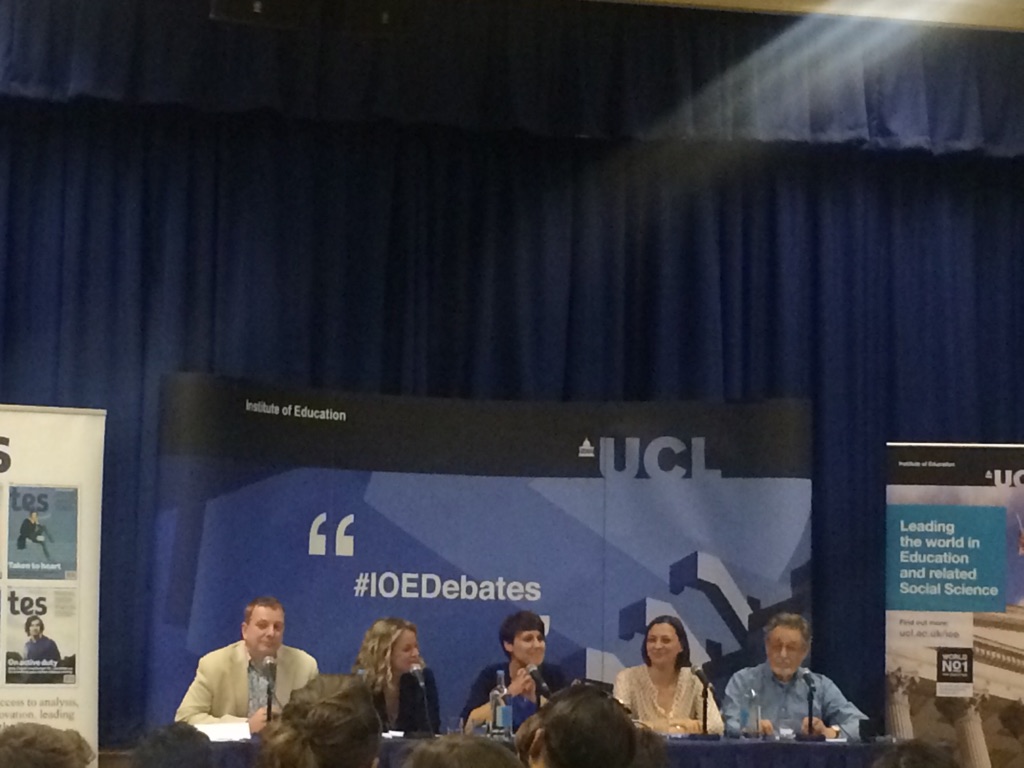
Debate at UCL IoE on 15th May 2018

Panellists:

Becky Allen, Director of the Centre for Education Improvement Science, UCL Institute of Education (IOE)

Steven Rose,Emeritus Professor of Neuroscience, the Open University

Cat Sebastian,Reader in the Department of Psychology, Royal Holloway, University of London

Michael Thomas, Professor of Cognitive Neuroscience at Birkbeck, University of London, and director of the Centre for Educational Neuroscience (CEN)

Discussion chaired by:

Becky Francis, Director, UCL Institute of Education
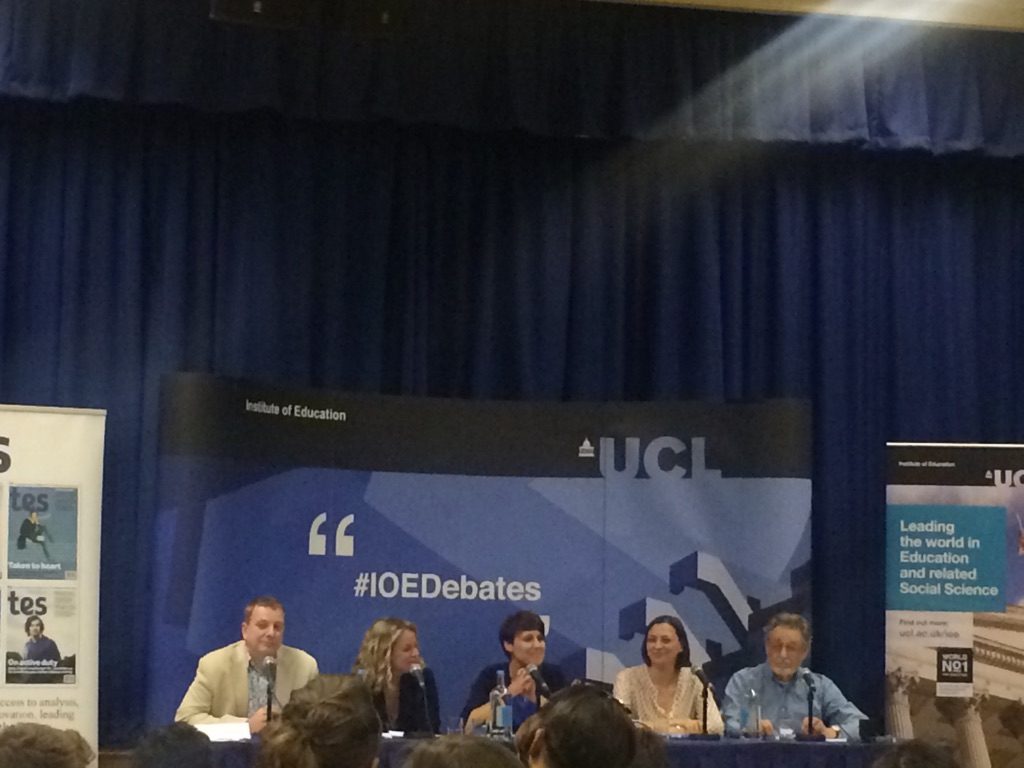
ioe-debate-photo

This fascinating debate set out to explore what can be expected from educational neuroscience for policy and practice, as well as how to recognise ‘neuro snake oil’ (see here for the CEN series on neurohits and neuromyths). Each panellist introduced their viewpoint and initial thoughts:

Michael Thomas began by saying that we learn because the brain is plastic, i.e. pathways and connections in the brain are made and changed based on our experiences. The problem is that learning is a complicated process with seven systems interacting in the brain, all varying in their development and in their sensitivity to socio-emotional factors. Understanding learning is also challenging as it is only one aspect of a very complex educational system. There are two main ways that neuroscience can be translated into something useful for teachers – understanding brain health so students are ready to learn, and understanding how learning takes place in different subject areas. He concluded by saying that although it is a challenge, it is one worth pursuing.

Becky Allen highlighted the impact of having an incomplete understanding of cognition, particularly the lack of confidence in cognitive theories, which are important for generalising across different groups of children and classrooms. Currently, ideas such as pretesting, redundancy, and desirable difficulties are being promoted by some influential figures in education, however these run the risk of being the new myths – they are based on a small number of studies with short-term outcomes. The key question is whether ‘learning how we learn’ will help us know how to teach. Each class group has around 30 individual learners, meaning that teachers spend the majority of their time with the group rather than considering learning at an individual level.

Cat Sebastian outlined the positive influence of neuroscience on understanding the adolescent age group; why teens behave like they do, and how connectivity in decision-making and emotional regulation continues to mature in this age group. This can help both teachers and students understand changes in risk-taking behaviours and the changing influence of peers. Neuroscience can also help explain why different interventions may be more successful with some groups than others, and can even motivate wider research in particular areas; e.g. there had been very little research on adolescence until neuroscience showed that development continues into and beyond this age group.

Steven Rose began by making the point that it is children who learn, not brains. Brains are embedded in children who are embedded within a school and society. He questioned whether answering questions about the brain can really help with learning and teaching. It may even distract from things that we do know and need to respond to, e.g. food banks in order to meet the current needs of students. Many of the neuromyths, including VAK (visual, auditory, kinaesthetic learning, or learning styles) and brain gym were considered ‘good science’ a couple of decades ago. He closed by predicting that some of the current developments in techniques and technologies may well turn out to be neuromyths of the future.

Becky Francis summed up the opening comments as three important considerations: 1) risks of early adoption of scientific ideas and fads; 2) the importance of interaction between different disciplines, and 3) considering the wider educational context.

The Q&A session drew out further themes and practical applications, but an important first question was about different timescales. Translation into practice needs to be evidence-based, and it is important to have intervening stages between neuroscience and practice – perhaps this is a new profession in itself? An analogy was drawn with medicine, which has taken 200 years to get to a position of being research-led but where doctors still treat the person. Scientists may take years to develop understanding; policy-makers have about 18 months; teachers need something for Monday morning! A way of managing this is to balance the time and disruption of changing practice, against the risk factors. For example, spaced learning has a one-off disruption and time cost, but it is not likely to be damaging, and therefore on balance may be something teachers could introduce.

The panel then responded to questions from the floor.

When asked about mental health, they highlighted the importance of shaping policy for allocating resources, but that neuroscience has a role in identifying risk factors, understanding of resilience, and how early life stresses can have long-reaching impacts on brain development.

A question on cognitive load theory (amount of information that can be held in working memory) highlighted the fact that some ideas may be introduced more easily because they are easily implemented, and help to make sense of the wide variation across a class. However, it may also lead to inappropriate expectations about how behaviour can be changed; e.g. training working memory does not lead to gains in other areas.

Finally, a question about funding research emphasised the importance of multidisciplinary research, where funding could be allocated on the basis of a problem to be solved, rather than being discipline-focused.

The session concluded with an opportunity for attendees to identify areas they would like neuroscience to answer, such as concerns parents may have about whether they have passed on difficulties or challenges to their children e.g. in maths.

This well-attended event emphasised once again the interest people have in understanding how knowledge about the brain may inform teaching practice and improve children’s learning. One important outcome from the discussion was the importance of multidisciplinary research; not only between education, psychology, cognitive science, and neuroscience, but also with social disciplines. The context of students’ learning is important and needs to be considered. Also, many are aware of neuromyths which has led to a certain amount of cautiousness about adopting new ideas before they are fully researched. Therefore, there is a balance to consider between time commitment and disruption vs risk. Overall, there was general agreement that it is useful and important to understand ‘why’ – why some interventions are more successful with some than others; why some children respond to certain teaching methods better than others; why there is such variation within and between each class. Through exploring answers to these questions, educational neuroscience will have something to offer to teachers and learners – but it is unlikely to be ready for Monday morning!

Click below to watch the video of the event:
ioe-debate-picture-for-cen-blog

CEN seminar: What’s involved in designing and evaluating an education intervention?

Thank you to Dr Sveta Mayer for a fascinating discussion about her journey towards designing and evaluating an education intervention. The intervention involves computer-based activities which encourage children with autism to work out what animated characters are feeling and why. They can then relate this understanding to comparable social interactions in the real world.
Here is a summary of her talk.

Design and evaluation of an education intervention for children with autism targeting social and emotional engagement through observation.

sveta-for-cen-copy

by Dr. Sveta Mayer, Lecturer.  UCL Institute of Education

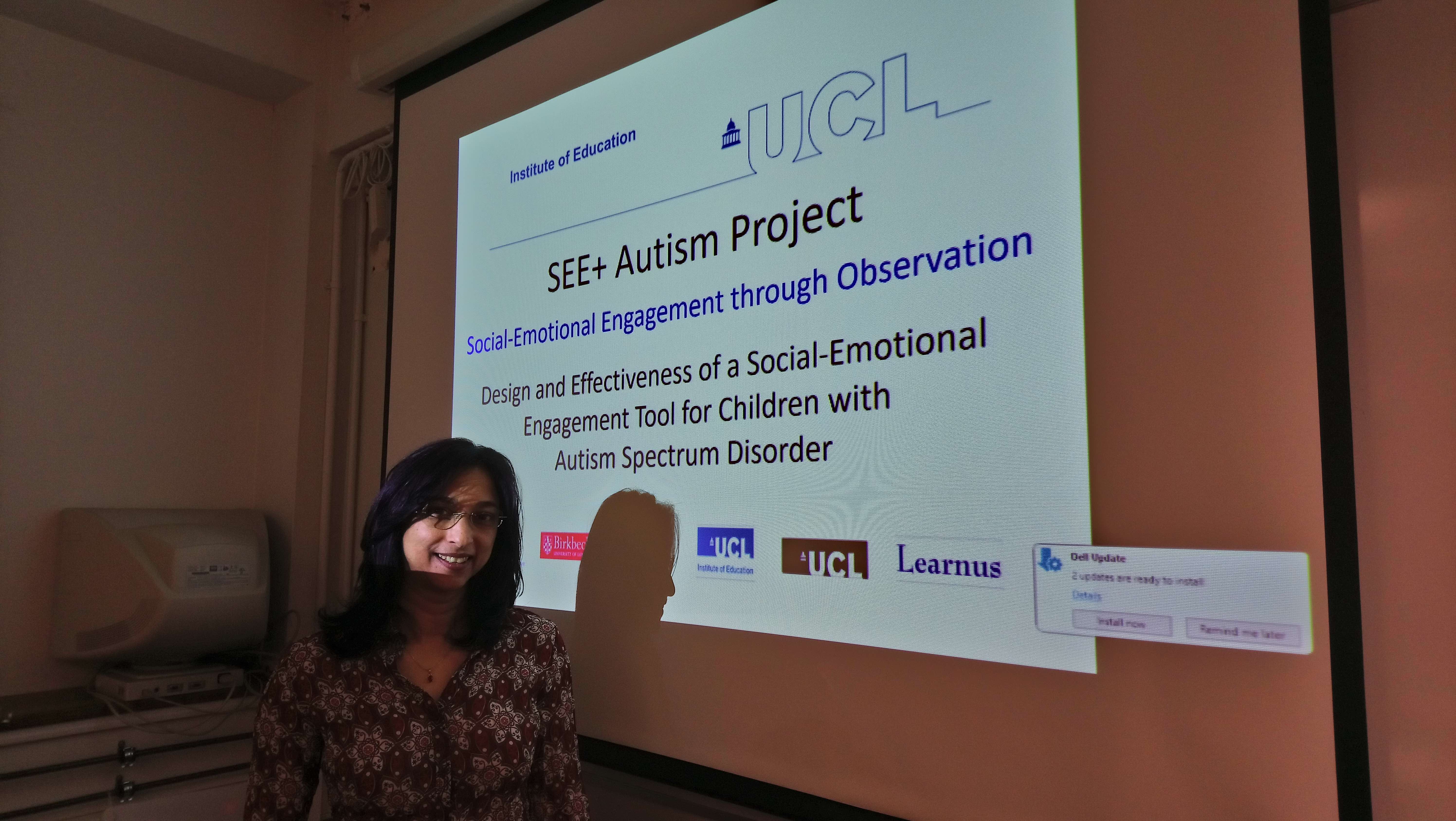
Sveta Mayer (PhD), lecturer at UCL Institute of Education, discussed her recent research project called See+ Autism at yesterday’s CEN research group session. The project involves the design and evaluation of a computer-based educational tool to support autistic children’s social and emotional engagement. This involves children observing animations of virtual characters engaged in social scenarios.

sveta-cen-seminar-screenshotSveta discussed how she met the challenge of evidence-based research, policy and practice related to educational neuroscience to inform her research by drawing upon a multidisciplinary review of literature to inform her work.  She also discussed why a participatory research approach involving practitioners-as-researchers is invaluable to address the challenge of ecological validity, i.e. supporting transfer of children’s computer-based learning into their lived experience of the social world around them.

Sveta hopes to draw on her findings to establish a blended learning education tool incorporating computer-based learning augmented by practitioner-based support. Sveta carried out foundational work for this project as part of the UnLocke project (http://unlocke.org) and also received UCL seed funding.

Educational neuroscience… or (if you want a jazzier title)… Killer robots and how science works in the brain!

Blog written by Prof. Michael Thomas for the HMC (Headmasters’ and Headmistresses’ Conference) introducing educational neuroscience.

killer-robot-post-cen-website

If you’re of a nervous disposition, it’s not a good time to read the news. Even the technology pages, once a place of respite, now tell us that artificial intelligence is a danger, at risk of taking over the world, or at the very least, stealing our jobs. Its powerful learning algorithms can sift through mountains of data to log our every move.

Are computers now better at learning than humans? How much do we now know about human learning itself, given our greater understanding of how the brain works? And are these insights of use to educators?

Educational neuroscience is a scientific field that seeks to address these questions, by bringing together researchers from neuroscience, computer science, psychology, and education to explore how new insights into brain mechanisms of learning can inform educational practice (see https://impact.chartered.college/article/brookman-byrne-neuroscience-psychology-education/).

Human learning is (trusting somewhat in evolution, here) well adapted to the natural environments we have found ourselves in, but it nevertheless appears somewhat idiosyncratic when applied to education. Consider these questions:

  • Why am I liable to forget that the capital of Hungary is Budapest, but not forget that I’m afraid of spiders?
  • Why do I find I have learned things better after a good night’s sleep?
  • Why does my mind go blank when I’m stressed in an exam?
  • When I became a teenager, why did I sometimes do stupid, occasionally dangerous things just to impress my friends?
  • Why can I learn a new language so much more easily when I’m 5 years of age than when I’m 50?

If one were designing a machine to learn (of the sort intended to one day take over the world), one could imagine designing it without any of these properties. For example, the machine could store Capitals-of-European-Countries and Animals-I’m-Scared-Of as similar types of memories, and it need not forget either. One could build the machine without emotions like ‘stress’ or ‘anxiety’, which on the face of it seem to detract from human learning performance. And, battery life permitting, one could build a machine that didn’t need to sleep to achieve efficient learning. The reason why humans show these particular idiosyncrasies in learning lies in the particular way our brains work, because of its particular biological origins.

Educational neuroscience as a field is still in its early days. It is building a foundation of basic science of neural mechanisms of learning. One place to start is to understand the reasons why some of the best methods that teachers use are indeed so effective. Perhaps there will also be insights that offer new techniques to teachers.

The field is not without risks. The complexity of learning in the brain and the state of current scientific knowledge mean that there is a risk of premature translation before the foundation is established. The risk is heightened by the legitimate desire of policymakers to use scientific evidence to inform their education policies, the enthusiasm that educators have to inform their teaching with insights into how the brain works, and the desire of commercial companies to sell new techniques to schools using the latest neuroscience findings merely as window dressing (for some fun reading, see http://www.educationalneuroscience.org.uk/resources/neuromyth-or-neurofact/).

Nevertheless, projects are underway to evaluate new potential teaching techniques based on neuroscience insights (see http://educationendowmentfoundation.org.uk/news/new-research-to-investigate-if-neuroscience-can-improve-teaching-and-learni/). And the science of learning is far enough progressed to begin to draw a broad picture for teachers relevant to the classroom (e.g., https://impact.chartered.college/article/howard-jones-applying-science-learning-classroom/https://www.amazon.co.uk/Neuroscience-Teachers-Applying-research-evidence/dp/1785831836).

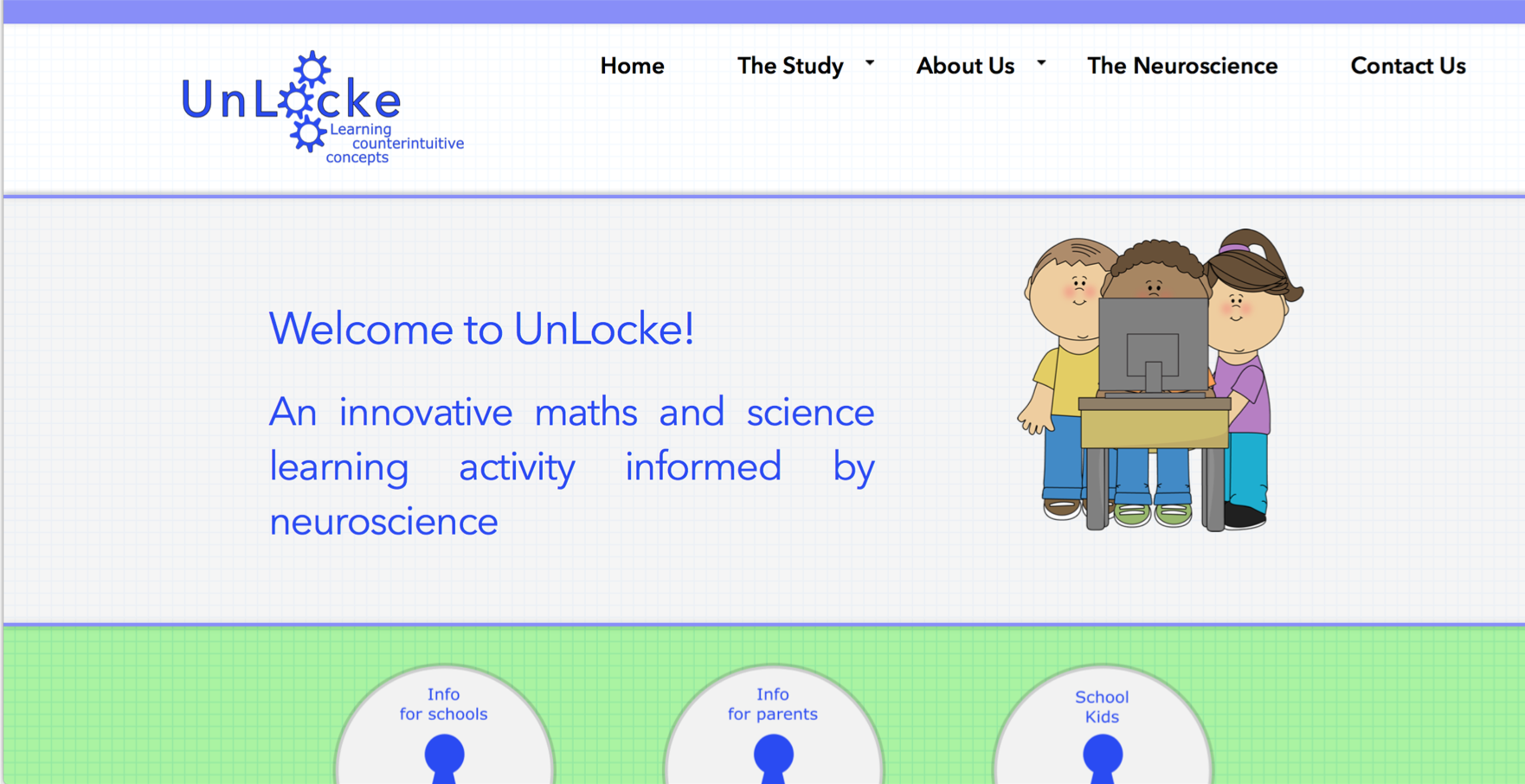
I’ll give an example of the kind of work currently underway in my research centre, the Centre for Educational Neuroscience (http://www.educationalneuroscience.org.uk/). The UnLocke project (http://unlocke.org/) was inspired by the observation that learning in maths and science sometimes involves inhibiting prior beliefs or direct perceptual information. For a child to learn that the Earth is round requires inhibiting or suppressing his or her previous experience that it seems to be flat (at least when you play football on it). Experts in science and maths get better at inhibiting prior knowledge rather than overwriting prior concepts with new ones.

unlocke-website-screenshot-cen-website

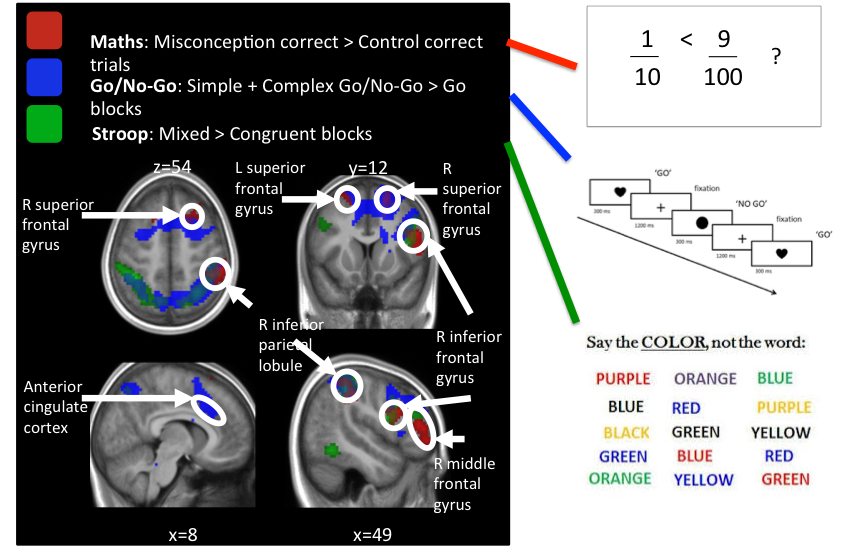
The fact that we can visualise the brain operating with modern scanning methods provides key insights here, because it’s hard to see people inhibiting knowledge in their overt behaviour. Inhibition is the brain stopping us doing things. We know the sorts of tasks that require inhibition. Say you’re shown a sequence of cards that either have a heart shape or a circle on them, and you’re asked to press a button onlywhen the heart appears. The sequences of cards flashes up, you’re ready to press the button, but if the circle appears, you have to stop yourself from pressing the button. Or say you’re shown a series of colour names (BLUE, RED, GREEN) printed in different coloured text, and you’re told to name the colour of the text, not name the colour word. It’s so easy to name the colour word, you want to say the colour word … but you have to stop yourself, and name the text colour instead. We can see regions at the front of the brain working harder in a functional magnetic resonance imaging scan when adolescents are asked to do these tasks (see below). Annie Brookman-Byrne, a PhD student at Birkbeck College, asked the same teenagers to solve counter-intuitive maths problems while in the scanner. They might be asked, is one tenth less than nine hundreds? The answer is YES, but part of you wants to respond NO, because the numbers in nine hundreds are bigger. When Annie analysed the results, she found the same inhibitory brain areas become active in solving the counter-intuitive maths problems as when stopping pressing buttons or reading colour names.

picture-for-killer-robot-blog-cen-website

Taken from: Brookman, A., Tolmie, A., Mareschal, D., & Dumontheil, I. (2016). Science and maths reasoning and inhibitory control in adolescence: An fMRI study. Poster presented at IMBES conference; Toronto, Canada.

It’s one thing to gain insights into the brain mechanisms involved in learning maths and science, another to make suggestions about how this may translate to the classroom. Insights must be transformed by pedagogical principles into learning techniques that may be useful for teachers in the classroom, which in turn must be evaluated for their effectiveness by behavioural trials.

In this way, the UnLocke team have design a computer-based learning activity for use in science and maths classes to encourage 8 and 10-year-old children to ‘stop and think’ when they are reasoning about maths and science problems, and we are currently evaluating its effectiveness in 90 schools around the country (https://educationendowmentfoundation.org.uk/projects-and-evaluation/projects/learning-counterintuitive-concepts).

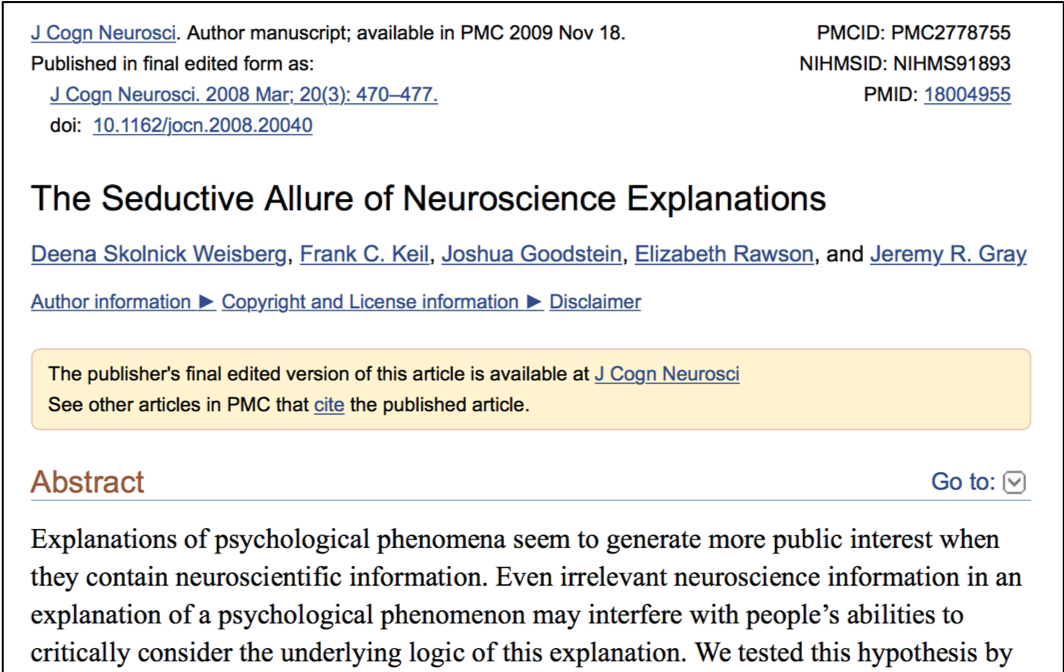
A word of warning. Don’t believe in a teaching method just because there’s a brain image next to it! (see https://www.ncbi.nlm.nih.gov/pmc/articles/PMC2778755/).

seductive-allure-paper-image-cen-website

Educational neuroscience is part of an evidence-based approach to education, which means you should believe nothing until you see evidence that a teaching technique really works. In this case: that improving kids’ inhibitory control skills when thinking about maths and sciences problems will improve their end of year performance on science and maths tests! Keep your eyes peeled for the results of our study.

Meantime, back to killer robots…

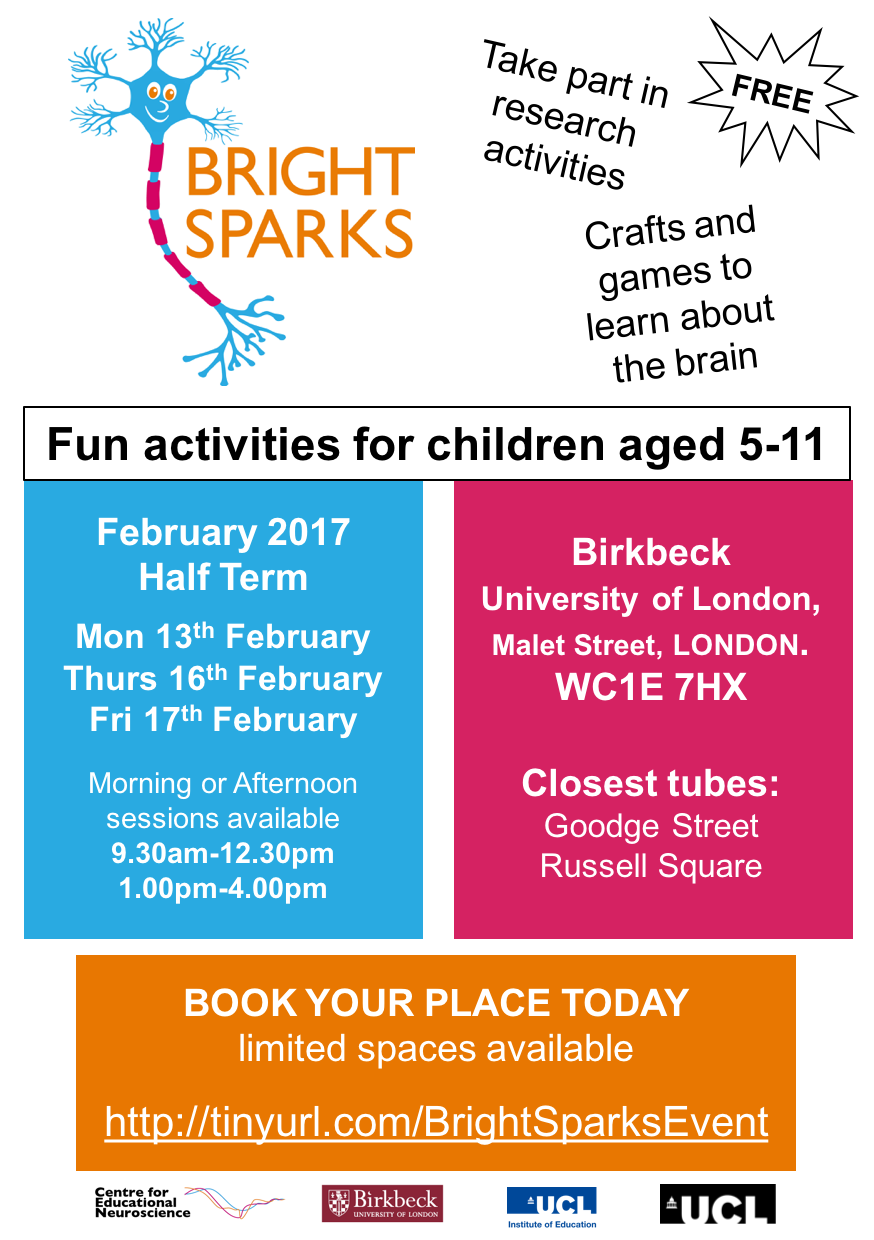
Registration now open for workshop. Neuroscience in the classroom: current progress and future challenges. Friday 17th March 2017

Registration is now open

Neuroscience in the classroom: current progress and future challenges

PhD students from the Centre for Educational Neuroscience are pleased to announce a day conference dedicated to discussing the progress our field has made and the challenges for the future.

Friday 17th March 2017 at the Wellcome Trust, Gibbs Building, 215 Euston Road, London, NW1 2BE

Confirmed keynote: Professor Gaia Scerif (University of Oxford)

Other speakers include: Dr Michelle Ellefson (University of Cambridge) and Dr Denes Szucs (University of Cambridge), Dr Sinead Rhodes.

We will also be having presentations from Wellcome Trust/Education Endowment Foundation funded projects:

Spaced Learning – Alastair Gittner

Teensleep – Dr Chris Harvey

Learning Counterintuitive Concepts – Prof Denis Mareschal

GraphoGame Rime – Dr Anji Wilson

Engaging the Brain’s Reward System – Prof Paul Howard-Jones

Fit To Study – Catherine Wheatley

We are also accepting submissions for poster presentations for research relating to the field of educational neuroscience or mind, brain and education. Places at the conference will be preferentially given to those who submit a poster abstract. There are poster prizes which will be awarded for outstanding work that bridges the gap between neuroscience and the classroom.

If you would like to register for this free event, please fill out the following form.

https://goo.gl/xt14Bq

The form also includes space to submit a poster abstract. If you wish to submit an abstract at a later date, please write this in the abstract box within the form.

We will confirm your place at the event by 10th February at the latest.

New workshop ‘Neuroscience in the classroom: current progress and future challenges.’ Friday 17th March 2017

‘Neuroscience in the classroom: current progress and future challenges’- a workshop supported by the Wellcome Trust and the Bloomsbury Doctoral Training Centre.

We are excited to announce a  new educational neuroscience workshop being organised  by the CEN on Friday 17th March 2017 at the Wellcome Trust.

Confirmed keynote: Professor Gaia Scerif, University of Oxford.

Other speakers include: Dr Michelle Ellefson, University of Cambridge and Dr Denes Szucs, University of Cambridge.

We will also be having presentations from a representation of each of the Wellcome Trust/Education Endowment Foundation funded projects:

https://wellcome.ac.uk/what-we-do/our-work/understanding-learning-education-and-neuroscience

The event will be free to attend and details for registration will be announced soon. We will also be accepting poster presentation submissions.

If you have any queries before then, please email Alex Hodgkiss: alex.hodgkiss.14@ucl.ac.uk 

Foundations of the Educated Brain: Infancy and Early Childhood – Part of ‘The Educated Brain’ Seminar Series

Summary of the Seminar:
Foundations of the Educated Brain: Infancy and Early Childhood
Part of ‘The Educated Brain’ Seminar Series
Monday April 18th, Newnham College, University of Cambridge

Blog written by Su Morris and Annie Brookman

The first of three seminars on ‘The Educated Brain’ began with a morning of six talks on infancy and early childhood. One of the main themes was the translation of neuroscientific evidence to early education, and the obstacles and benefits of doing so. Educational neuroscience is often considered to be the direct application of neuroscience research to the classroom, which is understandably criticised as a fruitless pursuit. Rather, as we heard throughout the morning, educational neuroscience is about taking an interdisciplinary, multi-level, scientific approach to education. Speakers referred to collaborations between neuroscientists, psychologists, and teachers, but also architects, computer scientists, geneticists, speech and language therapists, and mathematicians. As evidenced by the talks we heard, educational neuroscience takes into account the genetic, cognitive, behavioural, and social levels that influence education. It also aims to work with educators to design educationally-relevant studies that teachers want to know the answers to. With regards to infancy and early childhood, one key question is whether or not the early years form a special, sensitive period that requires a particular focus for educational resources and intervention. In the case of clinical conditions such as stroke, it seems that early intervention is better to enable children to catch up with their peers, with evidence of early childhood as a period of vulnerability. However, the evidence for sensitive periods in the early years does not yet extend to typical development, and we seem to have no convincing evidence yet that the early years should attract extra funding in cases where there are no clinical problems.

The afternoon session allowed further discussions arising from the morning’s presentations, through an interactive workshop. Questions were collected and discussed in groups which brought together people from a wide range of backgrounds, including teachers, psychologists and neuroscientists – a great illustration of the collaborations mentioned in the morning presentations. Each group focussed on their own area of interest, such as child-led and adult-led activities in the early years, intervention policies for particular socio-economic groups, assessment, and stress in both school leaders, teachers, and pupils. The aim was to consider how neuroscience and education could together inform policy, and how communication between different groups could, and should, work in practice to foster research. The exercise provided insight into the views and priorities of those working in different areas. Although the focus of the session continued to be early years, many of the discussions could equally well be applied to all levels of education and learning.

The day was a fantastic opportunity to hear the latest research from highly respected speakers, and to share views and ideas about future research with others. We look forward to attending the next seminar in Autumn where we will hear about the educated brains of children and adolescents.

Summary of ESRC Seminar on Cognitive Training in Children, MRC-CBU 11-12 Jan 2016

Blog written by Annie Brookman and Su Morris, originally published here.

On the 11th of January, the Medical Research Council (MRC) – Cognitive and Brain sciencesUnit (CBU) welcomed researchers and practitioners to Cambridge for a two-day seminar on cognitive training in children. The workshop opened with a presentation from Edmund Sonuga-Barke from the University of Southampton, examining randomised control trials of Attention Deficit and Hyperactivity Disorder (ADHD) and assessing the importance of designing effective trials. Targeting the key cognitive deficits associated with ADHD (planning, inhibitory control, flexibility, and working memory) with multiprocess interventions has been shown to have a greater impact than targeting working memory by itself. However, the results of cognitive training interventions have not led to substantial associated improvement in ADHD symptoms. Sonuga-Barke argued that to maximise the effectiveness of interventions, they should be tailored to cognitive subgroups reflecting the heterogeneous nature of ADHD, and may be most effective when run alongside behavioural interventions. Rather than considering executive dysfunction as a causal factor of ADHD, it may be a comorbid factor, whereby functional impairment results when individuals exhibit both executive function deficits and ADHD symptoms.

Next up was Michelle Ellefson of the University of Cambridge, who spoke about the potential for using chess as a cognitive intervention in older children. Ellefson argued that chess can be seen as a non-computerised executive function training programme, as it requires flexible thinking, working memory, inhibitory control, and planning. It is also adaptive as players improve over time and continue to challenge each other. With this in mind, Ellefson used chess as a cognitive intervention in an after school activity for children in high poverty communities. Some improvement in executive function was seen, and the greatest improvement seemed to be in those who started with lower general cognitive ability. Analysis of the huge dataset is ongoing, and a next iteration is in the planning, with more precise measurements of intervention factors, such as time spent playing chess.

The third speaker was Emma Blakey from the University of Cardiff, who spoke about an executive function training programme for pre-schoolers. The programme saw an improvement in working memory skills following a short four-session training intervention. Blakey highlighted the importance of using a test task that is different from the training task to assess transfer. In this case, the training effect did transfer to a task sharing few features with the training task. Further, Blakey found far transfer to a mathematical reasoning task at three month follow up.

The final speaker for the first day was Usha Goswami of the University of Cambridge. Goswami spoke about her Wellcome Trust and EEF funded project investigating the effectiveness of a computerised programme called Graphogame Rime. Graphogame was developed in Finland, and is now played by all Finnish children when they are learning to read. While a phonetic version of the programme has been hugely successful in Finland, a rime version has been created for English speaking pupils, since English has many more irregularities than Finnish. Graphogame Rime helps children to use rimes in word-learning, such as ‘at’ in ‘cat’. This enables children to read groups of words with similar rimes, such as mat, sat, chat. Goswami hopes to find that this will be more effective than phonological training, and the project is ongoing. We look forward to hearing the results.

Day two of the seminar was kicked off by Sam Wass from the University of East London, who talked about his research on training attentional control in infants. With only a short training period, a significant improvement in attention was measured, however after 6 months only ‘sequence learning’ improvements remained. This suggests that infants, compared to older children, require a shorter length of cognitive training for improvements to be measured, however the effects may dissipate more rapidly, possibly due to increased plasticity in this age group.

Torkel Klingberg from the Karolinska Institute in Sweden presented data from a functional magnetic resonance imaging (fMRI) intervention study which predicted responses to mathematical and cognitive training in children. Four intervention groups were compared – reading, reading and working memory, reading and numberline training, and numberline training with working memory – with outcome measures differing from the training. The maths improvement was greatest in the numberline and working memory training group. Participants with low working memory scores at baseline showed the poorest improvement in working memory after training, suggesting that factors driving poor working memory development continue to limit progress even during working memory training interventions. It is suggested that these factors are genetic (DAT-1 and DRD2) and neural (striatum). Brain activations predicted the type of training which participants would best respond to, therefore fMRI diagnosis could be an effective alternative to examination by neuropsychologists.

Duncan Astle from the MRC-CBU discussed his resting state magnetoencephalography (MEG) study which focussed on functional connectivity within the brain. If different areas of the brain concurrent oscillatory activity, it is likely that these areas are working together. A cognitive training group was compared with an active control group, and post-test resting state network connectivity was shown to improve in the test group, correlating with behavioural measures of working memory improvement. It was suggested that the cognitive training had an impact on phase amplitude coupling which results in improving connectivity rather than isolated changes in specific brain areas.

The final speaker was Susan Gathercole from the MRC-CBU, who was also one of the conference organisers. Gathercole spoke about the current state of working memory training studies and how we might best move forward. The gold standard of training studies are those that are randomised control trials which include an active control group rather than a waiting control group. Many of these studies have shown no or minimal far transfer. Gathercole argued that rather than aiming for far transfer, we first needed to understand near transfer. By understanding the mechanisms involved, we will be able to suggest why far transfer effects are inconsistently observed in current studies.

One of the key areas of discussion that arose throughout the seminar was how best to design interventions. Minimal training is ideal because of the time and money commitment, but we don’t yet know how much is needed to achieve the biggest effects. Some research suggests that effects tend to plateau following 15 to 20 training sessions. A recent move in the training literature is towards embedding cognitive training within the subject domain. Although this sounds like it may lead to greater transfer (within that domain) we are not yet sure if this is the case. Alan Baddeley referred to stroke patients who are trained to climb stairs in the clinic, yet need to be trained again to climb stairs in a different setting. Even though the same skill is required, it needs to be trained within each setting. It remains to be seen how well transfer will work for cognitive training within specific subject domain. The final discussion of the seminar focussed on the need to measure real-world abilities, rather than relying on lab measures. We need to make sure our research is applicable to the classroom and home, and this may require video-recording individuals in their natural setting, and coding their behaviour.

The workshop brought together exciting research on cognitive training in a variety of different fields, and facilitated valuable discussions about how to proceed with future research. The sessions demonstrated the importance of examining research methods and cognitive theory, as well as sharing findings and conclusions. The workshop offered a great opportunity to listen, to question and to network, and was certainly a very enjoyable and interesting event.